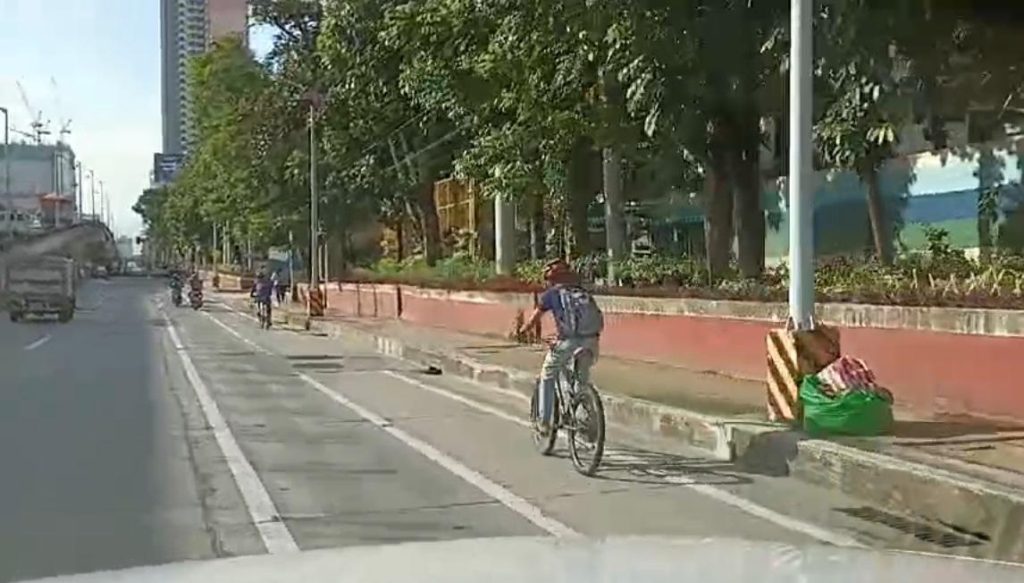
By Aldrin Pelicano via GMA News Online
When President Ferdinand Marcos Jr. delivered his State of the Nation Address (SONA) last month, Filipino pedestrians and everyday cyclists waited to hear a vision for inclusive and sustainable mobility. While transportation was heavily featured in the SONA, walking, cycling, and other forms of active transport were completely omitted. This glaring oversight reflects a development bias that favors private cars over people.
A May 2026 Pulse Asia survey confirms that an overwhelming 94% of Filipinos support building safer and wider walkways and bike lanes. National budgeting, however, keeps contradicting public demand.
Over the last four years, the active transport budget suffered a catastrophic collapse, plummeting from ₱2 billion in 2022 to ₱105 million in 2026. The trend worsens in the newly proposed 2027 National Expenditure Program (NEP), which proposes a meager ₱33.85 million for the Department of Transportation’s (DOTr) Active Transport Bike Share System and Safe Pathways Program.
This amount is simply not enough to develop actual physical infrastructure at any meaningful scale. We are systematically underfunding the daily reality of the vast majority of our population.
This gap isn’t abstract. As this year’s Habagat rains have again shown, commuters without cars are left wading through flooded streets to get to their destinations—schools, workplaces, and homes. Workers who show up to ensure our economic and business districts function in spite of the bad weather the past week deserve safe, convenient, reliable and dignified transport systems. We should stop at comments like “mabilis na rin naman bumaba ang baha ngayon” while many commuters continue to gamble their next mode of transport whether a jeepney, bus, motorcycle taxi, or our rails would be available when they need to make a trip.
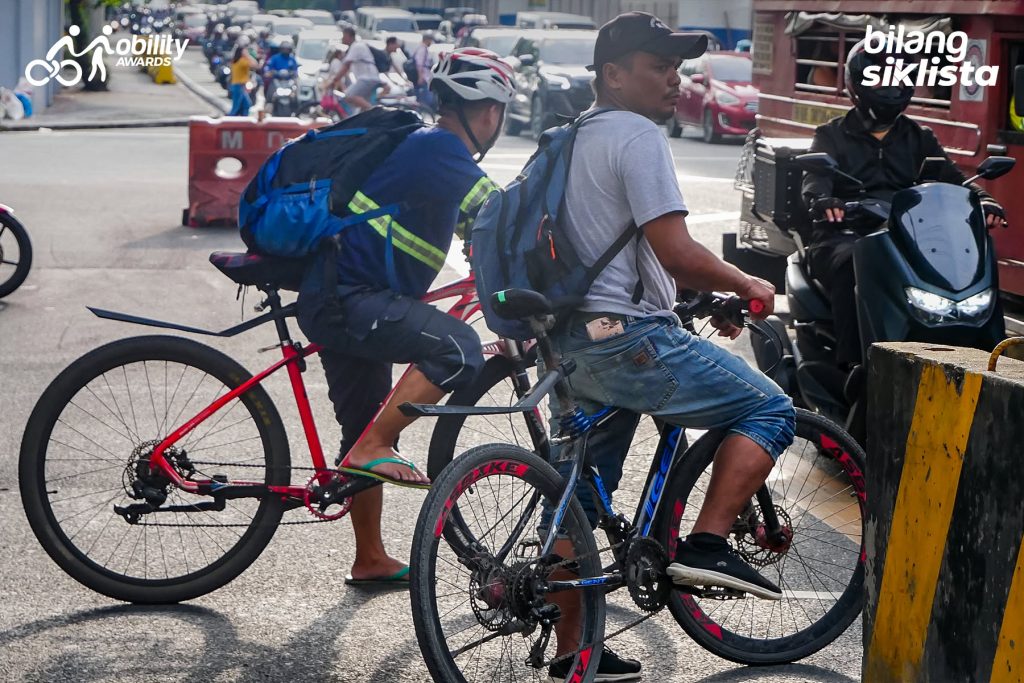
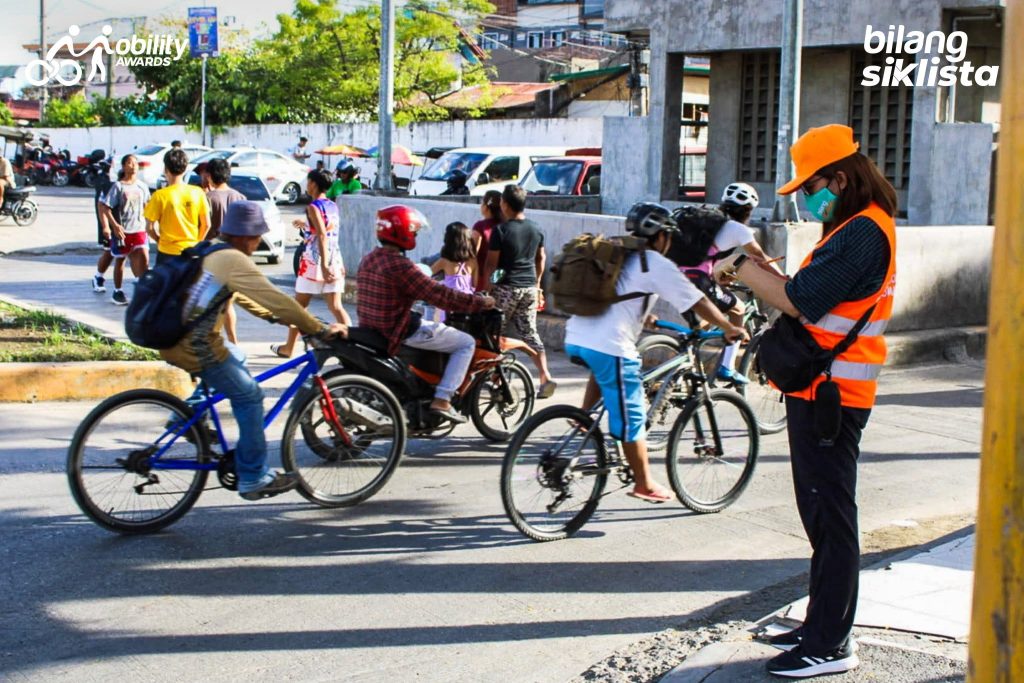
For our daily workforce—the security guards, construction workers, and service sector employees—walking and cycling are not weekend hobbies or lifestyle choices. They are financial lifelines. For schoolchildren and youth who are economically powerless, but carry the hope of every family and the future of our country, walking and cycling to school is the most cost-effective option. Denying them safe infrastructure is not just an engineering oversight; it is an assault on their mobility and dignity.
What makes the Pulse Asia survey results truly resonate is that the public inherently understands interconnectivity better than the bureaucrats holding the purse strings. The demand for safer bike lanes and walkways (94%) is virtually identical to the demand for expanded public transport lanes (93%) and heavily supported by the call for transit subsidies (82%).
In urban planning, we talk a lot about the first-mile and last-mile problem. A commuter’s journey doesn’t begin or end at the doors of an MRT station or a jeepney stop; it begins when they step out of their home and ends when they reach their school or workplace. Active transport and mass transit are two halves of the same public utility. They cannot function efficiently if they are severed from one another.
When a protected bicycle lane stops 500 meters short of a major transit terminal, or when a sidewalk narrows so drastically that a pedestrian is forced into oncoming traffic just to reach a bus stop, the entire network fails. Building isolated, fragmented infrastructure is an expensive exercise in futility. We must design our streets as a cohesive, democratic web where walking, cycling, and commuting operate as one fluid ecosystem.
We do not need to succumb to aimless cynicism, but success requires moving away from the status quo. Fortunately, the publication of the NEP marks the beginning, not the end, of the budget process. Congress holds the power of the purse and still has a clear opportunity during upcoming budget deliberations to fix this gap.
To translate this public mandate into physical infrastructure, we need immediate interventions at all levels of government:
First and foremost, the executive branch must formally declare active transport and mass transit integration as a national economic and labor priority. Moving workers efficiently is a direct driver of macroeconomic productivity.
Moreover, Congress must reverse years of fiscal neglect and lock in a minimum floor of ₱1 billion for active transport—not just for the DOTr’s program funds, but for the Department of Public Works and Highways’ far larger road-building and road maintenance budget to cater to active transport users’ needs. Every peso poured into widening highways for vehicles or road maintenance should be matched by investment in better, more accessible sidewalks, protected bike lanes, and multi-modal connectors that Filipino commuters use.
Last but not the least, local governments can deploy local funds to implement low-cost, high-impact solutions: installing secure bike racks at mass transit hubs, lowering speed limits on residential feeder roads, and protecting existing lanes with physical barriers rather than mere paint.
Reclaiming our streets for people is ultimately an invitation to build a bridge between drivers, cyclists, and pedestrians, rather than fracturing them over scarce road space. When we prioritize the modal share of walking, cycling, and public transit, we create cities that not only survive but thrive.
Ninety-four percent of Filipinos have given our leaders a clear mandate. They are not asking for miracles; they are asking for a safe, connected path to get home alive. They have spoken. It is time this administration built its legacy on a transport system that moves the nation with dignity, through flood and monsoon alike.
Aldrin Pelicano is founder of MNL Moves.